Nicotine in a cigarette: the two real figures
Two numbers circulate constantly whenever the nicotine in a cigarette comes up: around 10 mg according to some sources, under 1 mg according to others. Both appear in serious British publications, and yet they do not describe the same thing at all. That mismatch accounts for half the misunderstandings on the subject, and it becomes genuinely awkward at the moment you pick up an e-liquid bottle, where the unit of measurement changes entirely.
Nicotine in a cigarette: two figures, two questions
The total content of the tobacco inside a manufactured cigarette is commonly placed around 10 to 12 mg, within a wide band that British and international sources put at roughly 6 to 20 mg depending on the variety and the manufacturing process. That is a quantity of matter, physically present in the object.
The regulatory value is something else entirely. In the United Kingdom, the nicotine collected during a standardised laboratory measurement cannot exceed 1 mg per cigarette. That is a quantity captured by a machine under fixed conditions, not an amount anybody receives.
Keeping only one of those two numbers in mind leads to shaky reasoning every time. They coexist, they are both accurate, and they answer two different questions that happen to share a word.
Nicotine in a cigarette: content and measured yield
The distinction is the same as the one between the capacity of a bottle and the volume actually drawn from it. One describes what is there, the other describes what a protocol recovers from it.
The tobacco in a manufactured cigarette generally weighs under a gram. Nicotine makes up a fraction of that weight, varying with the plant variety, the part of the leaf used and the treatment applied, which is why the honest answer is a range rather than a single number.
That content has never been printed on a pack, and it is not what regulation frames in the first place. The official measurement runs through a laboratory machine drawing at fixed intervals under a standardised puffing regime covering volume, duration and frequency. The condensate is then analysed and the nicotine quantified to a published standard.
Here is the part usually left unsaid: the value produced depends entirely on the programmed regime. Change the puff volume and the result changes, without the cigarette having changed at all. A laboratory protocol describes a laboratory protocol, never a person’s use.
That is also why the figures for absorption quoted in the British press, usually between 1 and 2 mg per cigarette, sit lower again than the content of the tobacco. Three different numbers, three different definitions.
What the British rules actually fix
The framework retained in United Kingdom law covers tobacco products and vaping products together. It is the source of the regulatory numbers quoted everywhere, and also of their absence from the packaging.
Three maximum values are set per cigarette, measured to ISO standards: 10 mg of tar, 1 mg of nicotine and 10 mg of carbon monoxide. No product exceeding any of those ceilings may be sold.
Those three numbers form a legal ceiling, not a market average. A brand can sit well below them, and nothing on the pack will tell you where.
The same framework prohibits printing those yields on the unit packet. Packs sold in Britain therefore carry no figure for tar, nicotine or carbon monoxide at all. That is the concrete reason the question of the nicotine in a cigarette keeps coming back: the information was removed from the only place the public used to read it.
E-liquid is read in mg/ml, not in mg per object
The change of unit is total, and that is where comparisons go off the rails. An e-liquid does not state a quantity per object but a concentration: 6 mg/ml means 6 milligrams of nicotine per millilitre of liquid.
Nothing on that label describes the nicotine in a cigarette, and no arithmetic turns one into the other. A 10 ml bottle at 6 mg/ml holds 60 mg in total. The amount actually used depends on the volume that goes through in a day, not on a count of objects. That is why day to day tracking is done in millilitres, and why how long a 10 ml bottle lasts is a far more informative reference point than any conversion.
The daily nicotine calculator on the home page applies exactly that arithmetic: bottle strength multiplied by daily volume. Nothing more complicated is needed, and nothing simpler is honest.
The strength steps sold in Britain
The British market does not offer an infinite set of values. Regulation caps the top of the scale and manufacturers have settled on a handful of standard steps, which makes reading a shelf simpler than it looks.
| Step | Nicotine in a 10 ml bottle |
|---|---|
| 0 mg/ml | 0 mg |
| 3 mg/ml | 30 mg |
| 6 mg/ml | 60 mg |
| 10 or 12 mg/ml | 100 to 120 mg |
| 18 mg/ml | 180 mg |
| 20 mg/ml | 200 mg |
The rules cap nicotine containing liquids at 20 mg/ml, limit nicotine containing bottles to 10 ml and tanks to 2 ml. Nicotine salts obey the same 20 mg/ml ceiling: what sets them apart is the throat sensation, not the concentration permitted.
That 20 mg/ml figure is a legal maximum and nothing else. It is not a starting point, not a benchmark and not a value anybody should read as suitable for a given profile. Choosing among the steps is a matter of hardware, volume and personal comfort, taken step by step as set out in our piece on lowering a nicotine strength.
The 0 mg/ml step sits outside that framework since it contains no nicotine, which earns it different packaging rules, detailed in our article on the nicotine free vape.
Where the strength is read on a bottle
Labelling of nicotine containing liquids is itself regulated, which makes reading a British shelf easier than it first appears. Three pieces of information must appear on the packaging, and between them they place any reference.
The concentration appears in milligrams per millilitre, sometimes doubled with a percentage by mass. The capacity is given in millilitres, capped at 10 for a nicotine containing liquid. The propylene glycol to vegetable glycerine ratio completes the picture, usually written as 50/50 or 30/70.
A fourth marker sits on the box rather than the bottle: the mandatory nicotine warning that accompanies any product containing it, alongside the 18 plus restriction on sale. Its absence from nicotine containing packaging is a signal not to ignore.
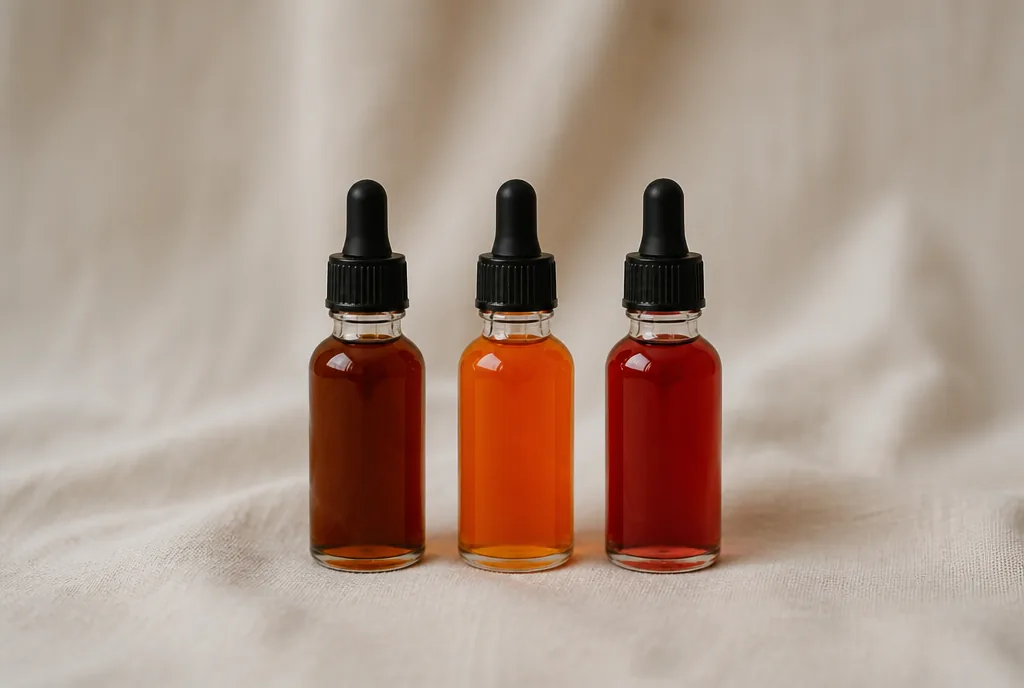
Finally, the colour of the liquid indicates nothing about the strength. A very amber 3 mg/ml and an almost clear 18 mg/ml sit side by side on the same shelf: the tint comes from the flavourings and from oxidation, never from the concentration.
Frequently asked questions
Does the figure vary between cigarette brands?
Yes, below the regulatory ceiling. Measured values differ with the tobacco blend, filter ventilation and the paper used. Since nothing is printed on packs, those differences are no longer visible to a buyer.
Does hand rolling tobacco follow the same ceilings?
No. The 10 mg, 1 mg and 10 mg ceilings apply to manufactured cigarettes, unit by unit. Rolling tobacco is sold by weight and the quantity per rolled unit depends on the person making it, so no per unit value can be fixed.
What does a strength shown as a percentage mean?
A percentage by mass converts directly: 2 per cent corresponds to 20 mg/ml, 1 per cent to 10 mg/ml, 0.5 per cent to 5 mg/ml. That style of labelling comes mainly from ranges designed for other markets.
Why do nicotine containing bottles stop at 10 ml?
Because the rules limit a nicotine containing e-liquid package to 10 ml. Large formats exist in nicotine free versions only, which is what shortfills are built around.
Does the nicotine in an e-liquid degrade over time?
It oxidises slowly on contact with air and light. The liquid darkens towards amber and the flavour flattens. An opened bottle keeps better standing upright, capped, away from heat.
Reading a strength without confusing the units
The nicotine in a cigarette is expressed in milligrams per object, that of an e-liquid in milligrams per millilitre. Those two quantities do not overlap and no honest cross multiplication connects them. The first belongs to a laboratory protocol framed by regulation, the second to a concentration printed on a label.
Holding that double reading in mind heads off most of the errors on the subject: the two figures simply are not comparable term for term. For following your own use across a week, only one of these units is workable, and it is the millilitre. That is the starting point for every practical reference point this site sets out elsewhere.
Editorial content for adult readers only. Nicotine is a substance that causes addiction. Not for sale to under-18s in the United Kingdom. This article is not a buying recommendation and is not personalised advice.